 PluginStats

Google Maps Api Checker users statistics
This extension can Check API is secure or not.
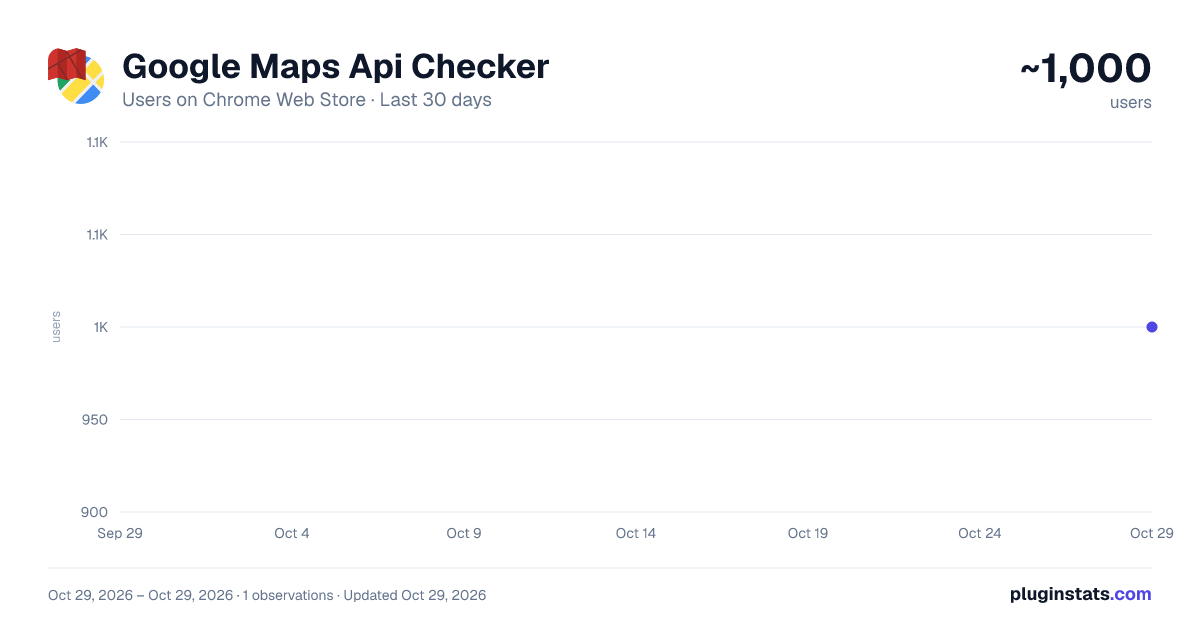
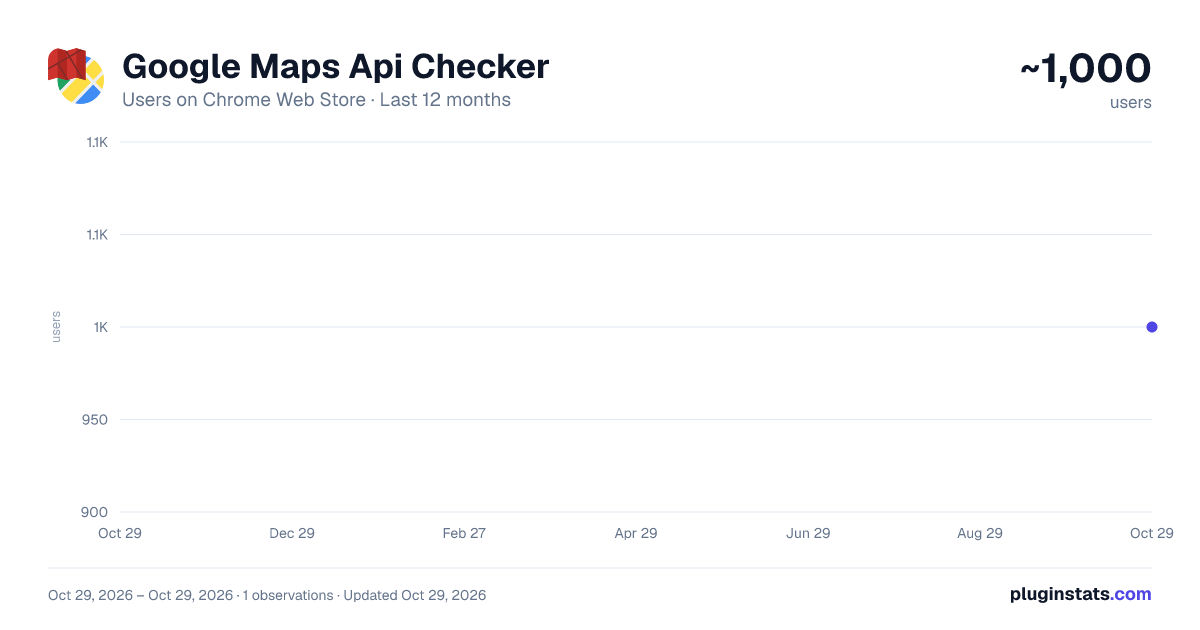
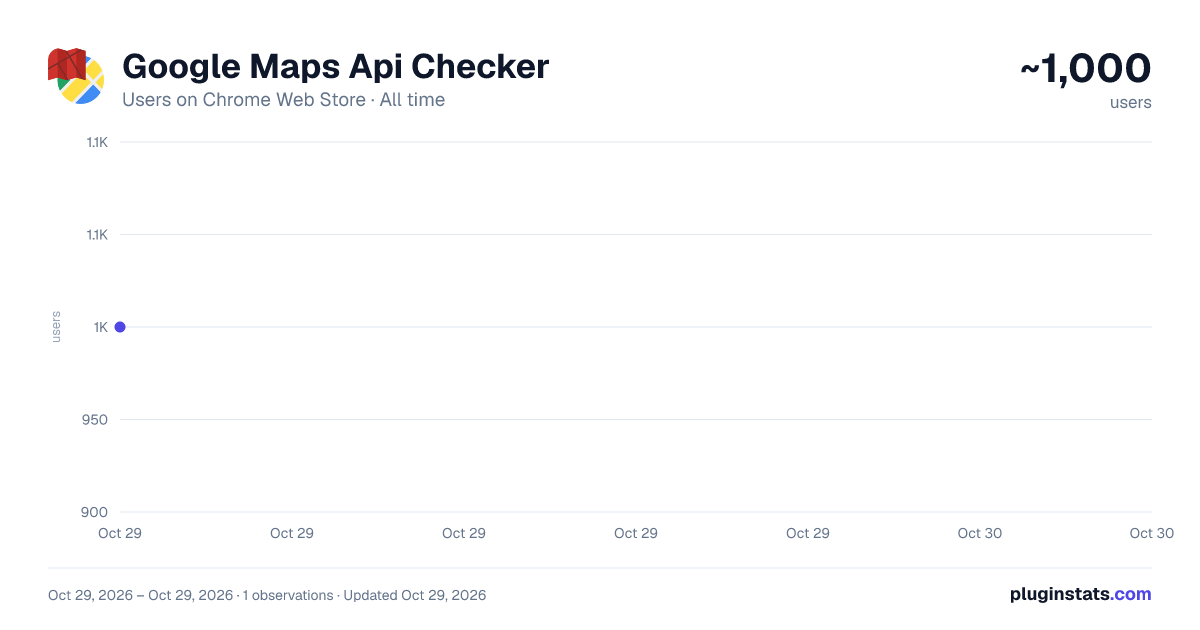
Google Maps Api Checker has approximately 1,000 recorded users on Chrome Web Store, ranking #1901 of 5,223 tracked listings.
Rating: 1.00 / 5 from 1 ratings
About Google Maps Api Checker
This extension can Check API is secure or not.
Elevate your Google Maps API security with the Google Maps API Sentinel, your ultimate defender against vulnerabilities! 🔐✨
🚀 Key Features:
✅ Comprehensive Checks: Google Maps API Sentinel meticulously inspects your API key across a range of parameters, ensuring robust protection for your applications.
✅ Staticmap API Security: Instantly detect and address vulnerabilities in your Staticmap API. Our sentinel keeps a watchful eye on potential threats to your map imagery.
✅ Streetview API Protection: Safeguard your Streetview API usage with real-time vulnerability assessments. Identify and rectify potential risks to ensure a secure map viewing experience.
✅ Embed API Vigilance: Whether Basic or Advanced, our sentinel scrutinizes your Embed API usage, providing insights and recommendations to fortify your map integrations.
✅ Direction API Assurance: Rest easy knowing that your Directions API key is secure. Our sentinel verifies and confirms the resilience of your API against potential vulnerabilities.
✅ Geocoding Confidence: Enjoy peace of mind as our sentinel ensures the security of your Geocoding API. Detect and mitigate risks for a worry-free geocoding experience.
✅ Distance Matrix, Autocomplete, Elevation: A comprehensive check confirms that your API keys for Distance Matrix, Autocomplete, and Elevation are robust and impervious to threats.
✅ Timezone API Safeguard: Receive alerts and solutions for potential vulnerabilities in your Timezone API usage. Ensure accurate time-related data without compromising security.
✅ Roads, Geolocation, Place Details: Our sentinel ensures that your keys for Roads, Geolocation, and Place Details APIs remain secure, providing uninterrupted service to your users.
✅ Nearby Search, Text Search, and More: From Nearby Search to Text Search, Places API, and beyond, our sentinel conducts a thorough inspection to safeguard your API keys against vulnerabilities.
🌟 Why Google Maps API Sentinel?
Stay ahead of potential risks and fortify your Google Maps API integration. Google Maps API Sentinel is your proactive defender, providing real-time insights and actionable steps to enhance your map security.
🚀 Secure Your Maps Journey:
Download Google Maps API Sentinel now and embark on a secure mapping journey. Defend your applications against vulnerabilities and ensure a seamless user experience! 🌐🛡️ #GoogleMapsSecurity #APIProtection #SafeMapping
Description from the Chrome Web Store listing.
README badge
Show your rank in a README or on your website. The badge updates automatically.
Charts
Images: 30d · 1y · all time · 1600×900 dark
Adoption over time
7/30/90-day growth
Ranking history
Ratings over time
Listing placement
Listing placement
Filled points are observed values; hollow points come from Internet Archive snapshots of the listing page. Dashed segments span periods with no observations — values between points are not interpolated.
Each band is one page of 20. Users on a linear scale. Placement is projected from users, so it can differ from the marketplace's own sort order. Hover a dot to see the listing.
Recent observations
Full history (1)Similar Chrome Web Store Tools plugins
All 20 Google Maps Api Checker alternatives



Data source
Covers every Chrome Web Store extension with at least 100 users, found through the store's public sitemap. User counts are read from public listing pages. The 10% most-used extensions are refreshed daily, the next 40% weekly and the next 40% monthly; the least-used 10% are not refreshed. Google displays rounded user counts (and caps the display at 10,000,000+), so small changes may not be visible. Rating counts above 1,000 are rounded (e.g. 1.6K).
Listing: https://chromewebstore.google.com/detail/google-maps-api-checker/ekkbkffdjofijcipnjjbcjgljfahpjcp. First seen Oct 29, 2026; last successful collection Oct 29, 2026. See the methodology.